 Manoj Dadlani
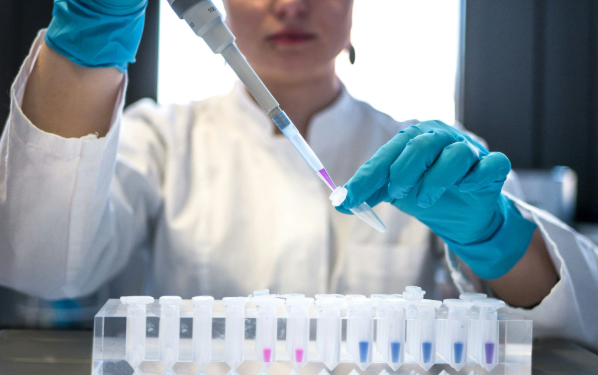
Affordable multi-omics sequencing combines genomic, transcriptomic, and metabolomic profiling into a single streamlined workflow. It cuts per-sample costs through shared infrastructure, bundled kitting, and cloud-based bioinformatics rather than standalone assays run through separate vendors.
At Cmbio, this approach forms the core of our cost effective microbiome sequencing solutions. We support microbiome research teams studying the human gut microbiome, human health, and human microbiome function with reliable data and no runaway budget.
Research budgets have not grown at the same pace as the questions scientists want to answer. Metagenomics, metatranscriptomics, and metabolomics each generate rich data on their own. Combining them used to mean juggling several vendors, invoices, and data formats across a project.
Cmbio built its platform to remove that friction. Research teams get genomic, transcriptomic, and metabolomic insight from one coordinated process, giving a comprehensive view of complex microbiomes instead of three disconnected data sets.
Unlock Transcriptomics & Metatranscriptomics with Cmbio
What Drives the Cost of Multi-Omics Sequencing
Sequencing costs depend on platform choice, sample throughput, and data analysis complexity, not on the number of omics layers alone.
A single-omics study only pays for one workflow. Multi-omics research multiplies kitting, reagents, sequencing runs, and analysis across metagenomic, transcriptomic, and metabolomic layers.
Any inefficiency in one layer gets repeated across all three, which is why budget and funding decisions hinge on choosing an efficient partner from the start.
Falling sequencing costs have reshaped what "affordable" means in genomics and proteomics research. Whole-genome sequencing dropped from roughly $4,000 per genome in 2015 to close to $100 per genome by the early 2020s as sequencing platforms scaled up throughput.
Proteome analysis, once a budget-buster, fell from about $3,250 per sample in 2006 to closer to $375 by 2021. Newer ultra-low-cost methods now push per-sample proteomics even lower.
Per-cell sequencing costs also fell sharply, tracking down from roughly $1.50 to well under $0.20 per cell as single-cell tools matured.
The main cost components in any microbiome research project break down into five areas:
- Sample collection and kitting: preservation tubes, stabilization buffers, and reagents tailored to each sample type
- Library preparation: converting extracted DNA, RNA, or metabolites into a sequencer-ready format
- Sequencing run: instrument time and reagent cost, which varies by platform and read depth
- Data analysis: taxonomic assignments, gene expression quantification, and metabolite identification
- Data storage: long-term retention of raw and processed data, which grows with sample volume and sequencing depth
These falling per-sample costs explain why integrated multi-omics providers can now offer bundled pricing that individual lab services could not match a decade ago.
Why Fragmented Sequencing Services Inflate Total Project Costs
Fragmented vendor workflows increase total project spend and turnaround time. Each additional lab adds its own kitting fees, reagent costs, and data formats that someone still has to reconcile.
Traditional multi-omics research often requires multiple assays, multiple platforms, and separate data analysis for metagenomics, metatranscriptomics, and metabolite profiling. That separation creates duplicated overhead at every step.
A lab running metagenomics through one vendor and metabolite profiling through another pays for two kitting processes and two sets of reagents. It also ends up with two analysis teams that were never designed to work together.
Cross-platform data integration then becomes a manual project of its own, adding hours of researcher time before a single insight comes out the other side.
How Integrated Multi-Omics Platforms Lower the Total Cost of Research
Integrated multi-omics platforms lower total research costs by consolidating kitting, sequencing, and data analysis into one workflow. This eliminates duplicate sample prep and cross-vendor reconciliation fees.
Cmbio built its model around this principle. Our services include custom kitting alongside short and long-read metagenomics, meta-transcriptomics, metabolite profiling, and multi-omics integration through a single cloud-based platform, giving clients direct access to a full suite of solutions and tools.
Combining metagenomics, metatranscriptomics, and metabolomics under one partner saves money. Samples get handled once, sequenced in parallel rather than shipped sequentially, and analyzed through a shared pipeline instead of three separate ones.
Cmbio's team of more than 100 scientists, including microbiologists, bioinformaticians, and data scientists, supports this integration directly, rather than handing off raw data for the client to sort out.
Global infrastructure adds another layer of efficiency. Cmbio operates labs in the US and Denmark, with a presence across the US, EU, and APAC regions.
This footprint shortens shipping distances for international research partners and supports scale efficiencies that a single-site lab cannot offer. Isolate sequencing and strain-level resolution round out the platform, giving researchers genus level and species-level identification without contracting a separate specialty lab.
Contact Us
Choosing between single-omics and multi-omics partners ultimately comes down to comparing per-service pricing against bundled, integrated pricing.
Comparison Table: Single-Omics vs. Bundled Multi-Omics Pricing Models
Bundled pricing models offer a lower cost-per-data-point than single-service pricing. They remove the duplicate steps that inflate standalone lab invoices and slow down discovery.
The table below breaks down where those savings come from.
|
Factor |
Single-Omics (Standalone Labs) |
Bundled Multi-Omics Platform |
|
Sample kitting |
Separate per vendor |
Consolidated, one-time |
|
Sequencing turnaround |
Sequential across vendors |
Parallel processing |
|
Data analysis integration |
Manual, added cost |
Included, cloud-based |
|
Data reconciliation |
Client-managed |
Provider-managed |
|
Cost per sample at scale |
Higher due to duplication |
Lower via shared infrastructure |
Cost-Effective Sequencing Technologies Used in Multi-Omics Research
Sequencing technologies vary in cost, throughput, and read-length tradeoffs. Picking the right one for each omics layer matters as much as picking the right partner.
Which sequencing platforms offer the best affordability for microbiome studies depends on what the project needs to measure. A few platforms consistently show up in cost-conscious research designs.
Long-read sequencing services can now deliver more than 50,000 reads of 250bp paired-end sequences for approximately $60 to $85 per bacterial genome, a price point that would have seemed unrealistic a decade ago.
Illumina markets its NextSeq 1000 and 2000 systems as flexible, affordable, and scalable for multi-omic workflows, with reagent costs that drop as low as roughly $9 per gigabase on higher-output configurations.
Oxford Nanopore's platform takes a different approach entirely. It enables genomic, epigenomic, and transcriptomic analysis on a single streamlined system, reducing the need to maintain multiple sequencing tools for one project.
Related technologies show up across these workflows too:
- Whole-exome sequencing targets protein-coding regions relevant to human disease research
- Short-read sequencing supports high-accuracy variant calling across bacterial taxa
- Long-read sequencing captures structural variants and full-length transcripts
Each plays a different role. A partner that can move between them without switching vendors keeps costs predictable and pricing transparent for customers.
Short-Read vs. Long-Read Sequencing: Balancing Cost and Depth
Short-read sequencing offers lower cost per sample than long-read sequencing, though it trades away some of the structural resolution that long reads provide.
Per-cell sequencing cost tiers vary by method. They run from 3' or 5' end-based sequencing at the cheapest end to full-length and long-read sequencing at the most expensive end of the scale.
For microbiome studies that need broad taxonomic assignments across a complex microbial community, short-read approaches often deliver reliable results at a lower price. This makes them well suited to studies profiling bacteria, fungi, viruses, protists, and archaea within a single sample.
For projects that need strain-level resolution or full-length transcript data, long-read sequencing justifies its higher per-sample cost. Cmbio runs both short and long-read metagenomics side by side, so researchers pick the depth they need for a given question instead of committing an entire budget to one method.
Bioinformatics and Data Analysis: The Hidden Cost Factor in Multi-Omics
Bioinformatics complexity determines the true total cost of multi-omics research beyond raw sequencing.
Multi-omics studies need more advanced data analysis support than single-omics studies. Integrating genomic, transcriptomic, and metabolomic data sets requires reconciling different file formats, normalization methods, and statistical assumptions across each data type.
Multi-omics profiling requires integrating a broad range of data types tied to gene expression, gut microbiota composition, and relative abundance of specific microorganisms. This challenge grows as researchers move toward single-cell resolution and face mounting data storage and interpretation hurdles.
A lab that receives raw data files from three separate vendors still has to build or buy the pipeline connecting taxonomic assignments to gene expression data and metabolite concentrations. That work is expensive in researcher hours even when the sequencing itself was cheap.
Related concepts shape this hidden cost too:
- Cloud-based data platforms for storing and querying large microbiome data sets
- Data integration methods for cross-referencing microbial communities against host health
- Single-cell resolution analysis for heterogeneous samples
- Strain-level identification for pathogenic or beneficial species
Providers offering built-in data analysis support, rather than a raw data hand-off, remove a major hidden cost from multi-omics budgets and give researchers additional resources they can act on immediately.
How to Choose an Affordable Multi-Omics Sequencing Partner
Researchers evaluate partners based on kitting support, turnaround time, data analysis, and total cost of ownership rather than sequencing price alone.
What should scientists look for when comparing multi-omics sequencing services on cost? It comes down to a handful of concrete criteria:
- Confirm bundled kitting and sample logistics support to avoid third-party fees
- Check that cloud-based data analysis comes included rather than billed separately
- Review global lab infrastructure to reduce shipping and turnaround costs
- Verify a track record with peer-reviewed microbiome studies and named research partnerships
- Ask about scalable pricing that stays accessible for both pilot studies and large cohort research
Cmbio's microbiologists work across agriculture, environmental, and human health projects, which means the same infrastructure that benefits clinical clients can expand into therapies, contamination screening, and pathogen identification for other industries.
If you are planning a study or want to bring sequencing into clinical practice with quality and reliability, our team can help. Cmbio provides end to end, integrated multi‑omics, from compliant kitting to analysis and interpretation, delivered through global labs and a transparent cloud platform. Start with a scoping call, or explore our microbiome sequencing services to see how we can design a pathway that fits your question and your patients.
Contact Us
FAQs
How long does multi-omics sequencing take?
Turnaround typically ranges from one to four weeks, depending on sample volume, sequencing depth, and whether metagenomic, transcriptomic, and metabolomic layers are processed in parallel or sequentially.
Can small research labs afford multi-omics sequencing?
Falling per-genome and per-cell sequencing costs, down to roughly $100 per genome and under $0.20 per cell, have made microbiome research accessible to smaller labs and scientists who previously relied on single-omics approaches.
What sample types are compatible with multi-omics sequencing?
Stool, tissue, blood, and swab samples are commonly used across metagenomics, metatranscriptomics, and metabolite profiling workflows, with kitting tailored to each sample type and study design.