 Manoj Dadlani
The Connection Between Celiac Disease & the Microbiome
 Manoj Dadlani : Jul 31, 2025, 5:13:08 AM
Discover the intricate connections between the microbiome and celiac disease in our guide, compiled by the Cmbio experts.
-1.webp)
If you work with the human microbiome, you already know the data can get messy fast. Between tricky sample handling, noisy sequencing runs, and multi step bioinformatics pipelines, it does not take much for a study to drift away from something a regulator would accept. GxP microbiome sequencing exists to keep that from happening by giving clinical laboratories, pharma teams, and researchers a clear, auditable way to move from sample to result without losing control of quality.
In this piece, we will look at how GxP standards sit underneath microbiome sequencing, why certified methods are worth the effort, and how omics technologies and good bioinformatics can give you data you actually trust for decisions about health and disease.
Find Out More About Cmbio's Regulatory Expertise
People often talk about “GxP” like it is one big rulebook, but in practice it is a family of related good practices that apply at different points in the life of a study or product. When you bring those into human microbiome research, they shape everything from how a stool sample is collected to how final reports land in a regulatory file.
The core trio of GxP compliance looks like this.
If you sketch the whole thing out, GxP microbiome sequencing ties your lab bench work, your next generation sequencing platform, and your data pipeline into a single system with clear responsibilities and checks. Once that framework is in place, the next question is: how do you prove your methods actually perform as claimed?
Anyone can run a 16S or shotgun sequencing experiment. The difficult part is showing that the method behaves the same from week to week and from site to site. That is where certified microbiome sequencing methods and microbiome standards come in. They give you a defined recipe and performance spec that you can point to in front of an auditor or a health authority.
A good certified method tends to share a few traits:
From a business perspective, the return is simple: fewer surprises. Reference controls catch library preparation or sequencing drift early, you spend less time arguing about data quality, and you are in a stronger position when an inspector asks how you know your human microbiome assay is fit for purpose. It also helps with sustainability challenges, because you reduce repeat experiments and wasted reagents when methods work the first time.
“Omics” can sound like a buzzword, but used well, these technologies are very practical tools for reducing uncertainty in microbiome analysis. You are not just sequencing for the sake of it. You are layering information to get a clearer picture of what the microbes are doing and how confident you can be in each result.
A few concrete examples help:
None of this removes the need for GxP. It actually increases it. The more data types you bring into a study, the more important it becomes to have defined methods, versioned pipelines, and clear reporting so that a reviewer can follow your path from raw sequence reads to a conclusion about a patient or product.
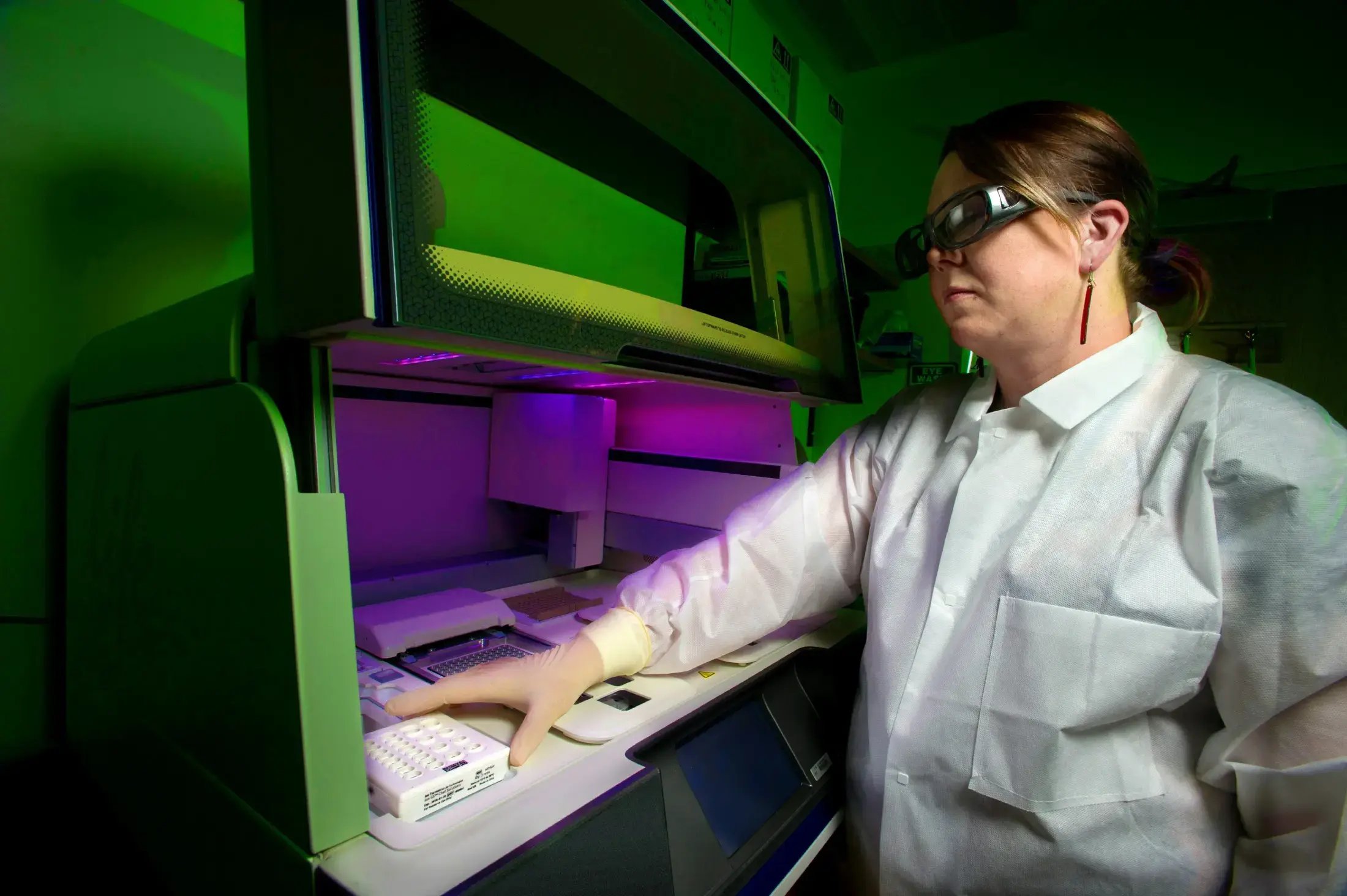
Regulatory compliance may feel abstract when you are focused on day to day lab work, but it directly influences your ability to use microbiome data in real applications. If you want to support a clinical claim, a manufacturing release, or a diagnostic decision, regulators will look at the system behind the data, not just the pretty plots.
A few reference points matter here:
When all of that is aligned, regulatory compliance stops being a box ticking exercise and becomes part of how you design better microbiome studies: clear endpoints, sensible sample sizes, defined analytical methods, and reporting that other people, including regulators, can actually understand and trust.
Not every organization wants to build a full GxP ready microbiome platform from scratch, especially if microbiome analysis is just one part of a much larger program. That is where a specialist provider comes in. A group that lives and breathes genomic methods, quality systems, and microbiome research can give you a ready made structure to plug your projects into.
In practice, that looks like:
Unlock the Human Microbiome with Cmbio
If you are exploring microbiome based diagnostics, looking at links between diet and gut microbiota, or trying to detect subtle changes in community composition over time, having that structure in place saves a lot of back and forth later. It also makes it much easier to answer questions from internal QA, external auditors, or regulatory reviewers when they ask how you generated and checked the data.
GxP standards are the good practice rules that keep microbiome sequencing honest: GLP in the research lab, GMP in manufacturing, and GCP in clinical trials. Together, they ensure regulatory compliance by setting clear expectations for how samples are handled, how data generation is controlled, and how results are documented so quality and safety are protected at every step.
When you are looking at the human microbiome for drug development or diagnostics, regulators want more than an interesting heatmap, they want proof that the underlying process is reliable. GxP gives you that proof by tying your sequencing, analysis, and reporting into a single quality system, which makes it easier to defend your decisions and gain access to new markets.
Certified sequencing methods matter because they harden your microbiome workflow against drift and guesswork. By using defined controls, validated protocols, and qualified pipelines, you protect data integrity and build in quality assurance instead of trying to patch problems after the fact.
 Manoj Dadlani : Jul 31, 2025, 5:13:08 AM
Discover the intricate connections between the microbiome and celiac disease in our guide, compiled by the Cmbio experts.
 Manoj Dadlani : Mar 6, 2025, 4:49:09 AM
Learn about 3 different microbiome-based cancer diagnostic methods in our latest research guide. Read today.
.webp) Manoj Dadlani : Nov 4, 2025, 5:52:16 AM
Manoj Dadlani : Nov 4, 2025, 5:52:16 AM
Explore how human microbiome research, sequencing, and clinical advances are revolutionizing health, disease, and precision medicine.