 Manoj Dadlani
How Do You Sequence a Microbiome? 5 Steps Explained
 Manoj Dadlani : Dec 16, 2025, 12:11:03 PM
How do you sequence a microbiome? Discover all 5 steps to the microbiome sequencing process in this expert guide.

Multi omics microbiome sequencing can sound intimidating, but it is really about context. Instead of asking a single question about the microbiome, you ask several at once and line up the answers. You look at which microbes are present, what they are capable of, what they are actually doing, and how the host is responding.
In this article, we will talk through what that actually looks like in a study, why integrating multi omics analysis tends to give more reliable answers, where it is already changing microbiome research, and how current sequencing methods and bioinformatics tools make this possible in practice.
Unlock Shotgun Metagenomics with Cmbio
If you strip away the jargon, a multi omics microbiome project is just a way of asking several related questions at once. You take the same set of samples and collect different kinds of data, each one showing you a slightly different angle on the same system.
For a human gut microbiome study, that might include:
The classic building blocks for multi-omics approaches are:
Illumina platforms still do most of the heavy lifting for short read rapid sequencing in metagenomics and host genomics because they are accurate and can handle large studies with many samples. Long read sequencing is now used more often in complex microbiome data because it helps assemble microbial genomes, resolve closely related strains, and tie genes to specific microbes more clearly.
Before any analysis happens, teams spend a lot of time on basic chores: trimming low quality reads, removing contaminants, normalizing counts, and checking for batch effects. Only after that do bioinformatics tools step in to handle taxonomic annotation, functional profiling, and integration of microbiome data with other omics data such as host transcriptomics or metabolomics.
The main reason people go to the trouble of collecting all these layers is simple: it is easier to trust a pattern when you see it more than once. Single omics studies can be powerful, but multi omics gives you extra checks and balances.
Think about a pathway involved in drug metabolism or bile acid transformation. If you see:
you are much more confident that this pathway really matters for that disease state or host phenotype.
To pull structure out of all this, researchers rely heavily on statistical methods:
On top of that, machine learning models have become a standard tool for multi omics data. In early onset colorectal cancer, for example, one study combined tumor tissue microbiome profiles with plasma metabolomics and trained a classifier to distinguish early onset from average onset disease. The metabolomics based classifier reached an AUC of around 0.98, while the microbiome based classifier alone was closer to 0.61, which shows how adding layers can dramatically change performance.
All of this only works if the foundations are solid. In practice, reliable integrated analyses usually depend on:
You can now find multi omics in almost every corner of microbiome research, but three areas stand out: chronic disease, environment, and diet.
In inflammatory bowel disease, including Crohn’s disease, researchers have used metagenomics, metabolomics, and host transcriptomics together to tease apart which microbes and pathways are tied to flare ups, remission, and response to therapy. These studies often show that it is not a single microbe driving the picture but a set of microbial functions and metabolites that move together with immune system activity.
Beyond human disease, standardized multi omics surveys of Earth’s microbiomes have used amplicon sequencing, shotgun metagenomics, and metabolomics to profile soils, oceans, and other environments. Those data show how environmental factors shape microbial community composition and metabolite diversity, and highlight specific microbes and chemistries that distinguish different ecosystems.
Diet adds a more familiar angle. Nutritional genomics studies combine food intake records with gut microbiome data and metabolomics to understand why people respond differently to the same diet. They often find that certain dietary patterns align with distinct microbiome signatures and metabolite profiles, which in turn relate to host phenotypes such as insulin sensitivity or low grade inflammation.
So while “multi omics microbiome sequencing” sounds abstract, the questions it answers are concrete: Who is more likely to respond to this therapy? Which environmental factors matter most here? Why does this diet help some people but not others?
If this kind of work were still slow and fragile, it would stay in a few specialist labs. The reason multi omics is spreading is that the sequencing technology and analysis pipelines are finally robust enough to support it at scale.
On the measurement side:
On the analysis side, there has been a clear shift from ad hoc scripts to more standardized multi omics frameworks. Recent reviews describe integrative methods grouped under statistical modeling, dimensionality reduction, latent factor models, and machine learning, and they stress the need for interpretability and reproducibility in real projects.
In practice, a typical pipeline now includes:
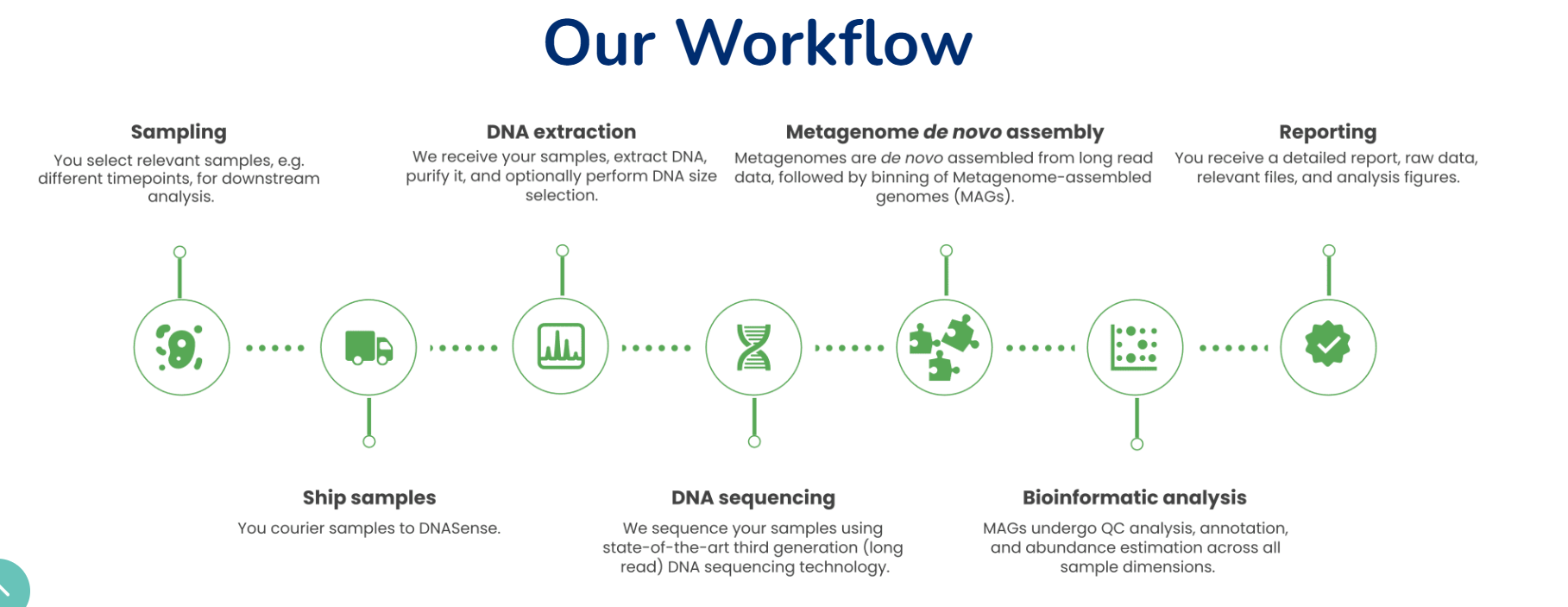
Cmbio builds on this landscape by offering end to end workflows: from planning which omics layers to include, through sequencing and mass spectrometry, to multi omic integration and interpretation. The aim is not just to hand over data files, but to map out clear links between microbiome features, host phenotypes, and environmental or clinical variables so that teams can act on the findings.
 Single omics and multi omics, side by side
A quick way to see why multi omics matters is to compare it directly with a single omics approach.
|
Aspect |
Single omics approach |
Multi omics microbiome sequencing |
|
Main focus |
One layer, for example taxonomic profiles or metabolite data. |
Several layers across DNA, RNA, proteins, and metabolites in the same samples. |
|
View of host interactions |
Often indirect and partial. |
Direct links between microbiome data, host phenotypes, and disease states. |
|
Typical analysis |
Simpler models in one feature space. |
Joint analysis using PCA, canonical correlation analysis, networks, and machine learning. |
|
Depth of insight |
Good for narrow, focused questions. |
Better for complex questions about mechanisms and microbiome signatures across multiple layers. |
Multi omics microbiome sequencing is not just about collecting more data. It is about putting different pieces of biology in the same frame: microbial community composition, microbial functions, functional activity, and host responses. When those pieces line up, they give a far clearer view of host microbiome interactions than any single omics layer can provide.
With mature sequencing methods, mass spectrometry, and a growing toolkit for multi omics integrative analysis, this approach has moved from a niche idea to a practical option for many microbiome studies. Cmbio’s role is to make that practical option reliable, by combining solid lab work with thoughtful analysis so that complex microbiome data turn into results people can actually use.
Multi omics microbiome sequencing combines different omics technologies such as metagenomics, transcriptomics, proteomics, and metabolomics to analyze microbiomes in a more comprehensive way. Instead of only asking which microbial species are present, this kind of microbiome analysis also looks at what those microbes can do, which genes are active, and which metabolites are being produced, which leads to a better understanding of their role in human health and disease.
Integrated omics analysis improves accuracy by cross checking signals across different data types and seeing whether they point in the same direction. When a change shows up in DNA level features, expression data, and metabolites, and those features also help a machine learning model separate disease from control samples, researchers can be more confident that this pattern reflects real biology rather than noise.
Multi omics is used in clinical precision medicine to link microbiome features to treatment response, in environmental sustainability projects that track how microbes support ecosystem functions, and in nutritional genomics studies that connect diet, the gut microbiome, and human health. Researchers apply the same logic in human studies and animal models, which helps move from descriptive results to a better understanding of how microbial species, metabolites, and host pathways interact in different settings.
 Manoj Dadlani : Dec 16, 2025, 12:11:03 PM
How do you sequence a microbiome? Discover all 5 steps to the microbiome sequencing process in this expert guide.
 Manoj Dadlani : Dec 18, 2025, 6:33:08 AM
Understand skin microbiome sequencing uses, sampling methods, and Cmbio’s skin microbiome research.
 Manoj Dadlani : Sep 3, 2026, 11:00:13 AM
Accelerate your microbiome research with cloud microbiome analytics. Discover faster, scalable insights. Explore our seamless cloud-based omics...